

Many people acknowledge that chaga mushrooms are good for the body, yet feel that 'the price is higher than expected' and that 'prices vary widely from company to company.' We commonly think that 'a high price means high quality,' but does this formula really hold in the chaga mushroom market?
Today, we want to resolve this question that many people have pondered at least once. Through the interesting truths hidden behind chaga mushroom prices, we aim to provide a clue for wise consumption.
1. A Battle Against Bears and Venomous Insects: A Life-or-Death Harvesting Process
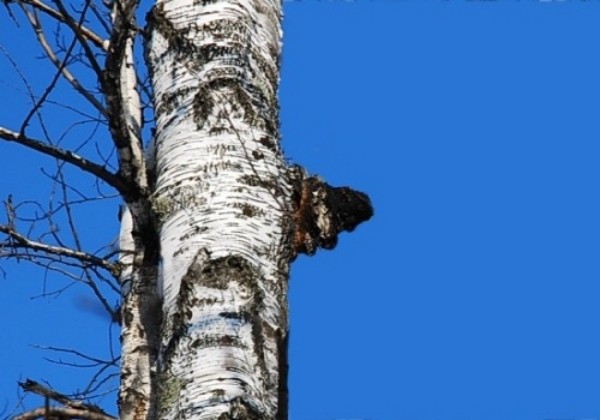
To understand the essence of chaga mushroom prices, we must start not at a farm that grows mushrooms, but deep in the forests of Siberia, Russia. Unlike crops cultivated by human hands, chaga mushrooms are 'wild' — growing on their own in harsh nature for more than 15 to 20 years.
And there is the life-or-death harvesting process. The taiga forests of Siberia, where chaga grows, are battered by brutal cold and blizzards for more than half of the year. When spring comes, the ground turns into swamps, and the venomous insect 'klesch' (tick), which burrows into the skin, awakens. In summer come the threat of bears and attacks by swarms of mosquitoes. Only after braving all of this and climbing a 20-meter birch tree can one finally meet the chaga mushroom.
Since every moment of the chaga harvesting process is a battle against danger like this, the value of chaga mushrooms is inevitably high by nature.
2. Three Months' Wages of a Worker in the 1950s? The Value of Chaga in the Novel 'Cancer Ward'
The high value of chaga mushrooms is not a phenomenon that arose recently. In 'Cancer Ward,' the autobiographical novel by Nobel Prize-winning author Aleksandr Solzhenitsyn, one can gauge the value of chaga from long ago.
The novel, set in the Soviet Union of the 1950s, states that the cost of consuming a month's worth of chaga mushrooms was comparable to two to three months' wages of an urban worker at the time. It is evidence of how precious and expensive chaga was regarded as a medicinal ingredient even some 70 years ago.
3. Not All Chaga Mushrooms Are the Same: Quality Differences from 1st to 100th
However, because chaga mushrooms do not grow by human hands and are 100% wild, their quality naturally varies widely. Mushrooms raised by human hands are all fairly similar in quality. But the quality of chaga mushrooms inevitably differs from one to another depending on the growing environment and the condition of the host birch tree.
To use an easy analogy, "If there are 100 chaga mushrooms, they can be ranked from 1st to 100th according to quality." In the end, this means that even though they all carry the same name tag of 'chaga mushroom,' their quality and value can differ as much as heaven and earth.
4. The Consumers' Dilemma: Is the Key to Price the 'Boss's Discretion'?
It is the usual perception of consumers that a higher price must mean better quality. Yet because chaga is wild and its quality varies accordingly, the common wisdom that 'a high price = high quality' often does not hold in the chaga market. This is likely true when a single company sells multiple products, but it is of no use when comparing products from different companies.
Of course, a product's price is basically determined by adding profit to the production cost (raw material cost + manufacturing cost). But the final variable that creates the real price difference often lies in the selling company's profit and marketing policies — in other words, the 'boss's discretion.'
This is because, in a reality where consumers find it hard to verify the quality of the raw material, whether the chaga product in front of you was made with top-grade ingredients or mixed with lower-grade ingredients to cut costs depends entirely on the seller's pricing policy. For example, there are currently companies in Korea that import the very same product made by the very same Russian company and sell it under their own brands, yet in reality consumer prices differ greatly from company to company.
Recommendations for Wise Consumption
Therefore, from the consumer's standpoint, when choosing a chaga product, it is better to choose the company first rather than the product. You should look into how long the company has handled chaga, whether it has expertise in chaga, whether its local network in Siberia is sound, and whether its customer reviews are good. If you just look a little more carefully at the company's website, you can gauge the company's depth. Making a phone call is also a good way.
It may be a bit of a bother, but I am confident that chaga mushrooms are fully worth it.
- Kinam Oh, kinam_oh@hanmail.net