

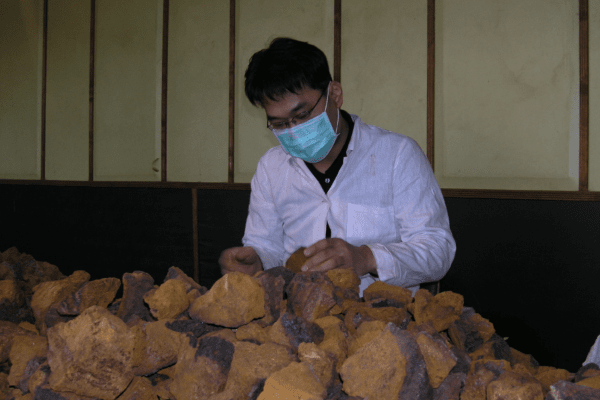
The Frustration of an Expert Who Cannot Speak Freely
I sell chaga mushrooms. Under Korean law, chaga is classified as a food, and sharing information about its benefits on websites, blogs, or personal social media accounts is prohibited.
Although I have made chaga my lifelong profession, studied it more extensively than anyone else, and accumulated many years of experience, I find myself in the frustrating position of being unable to answer even simple questions.
As a result, the internet is filled with posts written by people who have never properly studied chaga or experienced it themselves. Recently, in particular, I have frequently come across posts in online communities for cancer patients claiming that “taking chaga raises liver enzyme levels.”
With no way to verify the truth or basis of these claims, I am left with a complicated mixture of regret, frustration, and sadness.
I hesitated to write this, wondering whether doing so might only create further unnecessary misunderstandings. But even if I cannot say what chaga is good for, I felt that I should at least correct some basic misconceptions. That is why I am writing this article.

Fear and Anxiety About Liver Health
I have lived my entire life with fear about my liver health. After entering university, I learned that I was a hepatitis B carrier. I visited the hospital every month and took prescribed Ursa-type medication. I was content as long as my liver enzyme levels remained only slightly above the normal range.
But there was an even greater fear. My father, who was around the age I am now, had to leave his job because of hepatitis and cirrhosis. He was repeatedly admitted to and discharged from the hospital before passing away without reaching his sixtieth birthday. It was a liver-related illness.
Perhaps the reason I began my chaga business in my mid-thirties was also rooted in a desperate desire born of my fear about liver health.

How I Came to Choose Chaga as a Food I Would Consume for the Rest of My Life
After first encountering chaga during a business trip to Russia in 2003, I spent the two years before officially starting my business gathering and reading every piece of material I could find about it. It was a process of searching for a food I could consume and rely on for the rest of my life.
During this process, I received considerable help from my wife, who holds a doctorate in food engineering from Seoul National University. Her professional advice helped me overcome my limitations as someone without specialized training in the field.
There was plenty of material about its benefits, but what I focused on most was side effects and safety, particularly in relation to liver health. I believed that no matter how beneficial something might be, if it had side effects, I could not consume it myself—and naturally, I could not sell it either.

Studies on the Safety of Chaga
The following are representative research findings that gave me confidence that chaga does not cause problems with liver enzyme levels. (Sources: Russian Herbal Regulations; the paper Chaga and the Use of Chaga as ㅇㅇㅇ; and the paper Chaga Mushrooms from a Medical Perspective.)
1. In the early 1950s, a research team led by Professor Bulatov at the First Leningrad Medical Institute conducted large-scale research on chaga. They found that chaga was not toxic to normal cells and had no side effects. As a result, in 1955, the Soviet Ministry of Health officially approved chaga for consumption by the general population.
2. The First Leningrad Medical Institute conducted a study that followed and observed 150 patients with hepatitis and cirrhosis who consumed chaga over a period of approximately ten years. The study confirmed that chaga caused no side effects whatsoever.
3. The Russian Academy of Sciences reported that no side effects were observed when chaga extract powder was consumed at a daily rate of 1 gram per kilogram of body weight. When mice were injected with approximately thirty times that amount, mild paralysis of the nervous system was observed.
Twenty-Two Years of Consumption, Tested Through My Own Experience
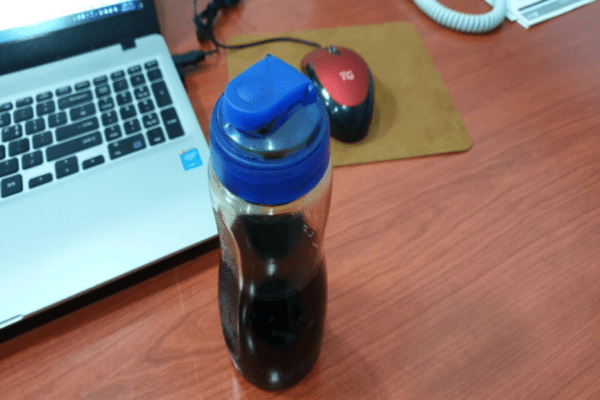
Once studying the available materials had given me a certain degree of confidence, I decided to test it through my own body. In 2004, I began taking chaga extract powder regularly. Sometimes I took 1 gram a day, while on other days I took as much as 30 grams. I deliberately consumed amounts ten times the recommended intake to test for side effects. On average, I consistently consumed about 8 grams a day.
Several hospital examinations revealed no particular problems or side effects. There were no abnormalities in my liver enzyme levels either. With this growing confidence, I stopped taking the prescription medication I had been using for many years. Since then, I have continued to consume chaga every single day without fail, and I am now in my twenty-second year.

The Safety of Chaga, Demonstrated by Tens of Thousands of Customers
Over the past twenty-two years, tens of thousands of customers have purchased our Ohkinam Chaga products. My mobile phone alone contains 37,000 customer phone numbers.
If raising liver enzyme levels were a general characteristic or problem associated with chaga, related issues would have occurred frequently among so many people consuming it over such a long period.
In twenty-two years, there has been only one case involving a concern about liver enzyme levels. Last year, a customer who had purchased our product requested a refund just a few days later, saying that their liver enzyme levels had risen.
Although we had not received any objective evidence showing that our product was the cause, we felt sorry about the situation and refunded the full purchase price without asking any questions. I personally sent a text message apologizing for the inconvenience. I then took the remaining returned product home and consumed all of it myself.
What I have observed among our customers over the past twenty-two years has also strengthened my confidence in chaga’s safety. To be honest, many of our customers have been consuming it consistently for five or ten years. Just recently, one customer reached twenty years of chaga consumption. A relationship that began when this person was in their mid-sixties has continued into their mid-eighties. I believe this would be difficult to imagine if chaga raised liver enzyme levels.
The Real Reasons Behind Misconceptions About Chaga
Why, then, has the claim that “chaga raises liver enzyme levels” spread? I believe there are two main reasons.
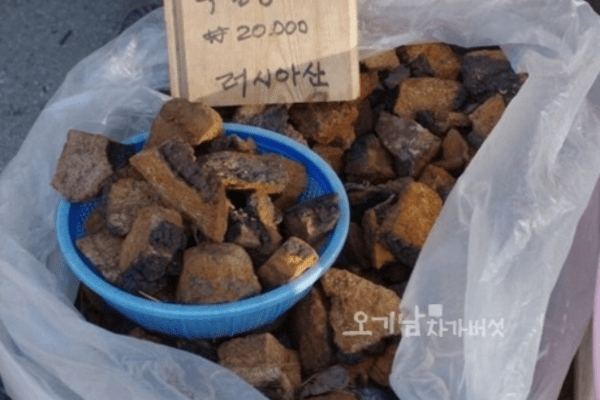
The first concerns raw chaga—that is, chunks or ground powder. As a natural material in an unprocessed state, chaga is highly susceptible to exposure to mold or bacteria during storage and distribution. Consuming such contaminated material can, of course, cause liver enzyme levels to rise.
This is not an inherent characteristic of chaga, but something that happens when contaminated food is consumed. Therefore, when choosing a chaga product, it is important to select one that has been handled hygienically and undergone appropriate processing.
The second concerns patients receiving chemotherapy or other medication-based treatment. Chemotherapy and other drug treatments often raise liver enzyme levels during treatment and for a long time after treatment has ended. It is already well known in the medical community that chemotherapy drugs can place a considerable burden on the liver as they attack cancer cells.
In such circumstances, chaga or other health foods are sometimes identified as the cause. In fact, liver enzyme levels often do not fall immediately even after chaga consumption is stopped. This is because the toxicity of the chemotherapy drugs remaining in the body must be completely cleared before liver enzyme levels can return to normal.
There is a case I experienced firsthand. A patient with terminal cancer was consuming red ginseng and chaga while undergoing chemotherapy. When the patient’s liver enzyme levels rose following chemotherapy, the treating physician pressed the patient about whether they were taking anything else. When the patient mentioned red ginseng and chaga, the physician told them to stop taking chaga immediately.
However, when the next test showed that the liver enzyme levels had not fallen after stopping chaga, the physician then said that red ginseng was the problem. The patient stopped taking red ginseng as well, but the liver enzyme levels remained unchanged. Eventually, the physician said:
“It seems the chemotherapy drugs may be what caused your liver enzyme levels to rise. But we cannot stop the chemotherapy, can we?”
Of course, I understand that physicians cannot know the ingredients and research behind every health food, and that their top priority is their patients’ safety. For that reason, I can understand why they might say, “Let’s stop everything for now.” Still, I find it unfortunate that the equation “chaga = elevated liver enzyme levels” seems to be becoming accepted as an established fact.

A Natural Product with Thousands of Years of History, and a Heartfelt Appeal
Chaga is not a substance that suddenly appeared one day in a laboratory. It is a natural product that Indigenous peoples in the Siberian taiga forests, where the feels-like temperature can fall to minus 40 degrees Celsius, have consumed daily for thousands of years, much like coffee or green tea. Thousands of years of history have confirmed that it causes no side effects, even when consumed for long periods, in large amounts, or by children.
I am not a physician. I am someone who sells chaga. Therefore, I cannot claim that this article is 100 percent objective. Nor would I presume to say that I know everything.
However, I speak as a hepatitis B carrier, as a son who lost his father to liver disease, as someone who has studied chaga for twenty-four years and consumed it every day, and as a person who has lived with a lifelong fear of liver disease.
“Properly processed and handled chaga products, when consumed in ordinary amounts, are absolutely not dangerous foods that raise liver enzyme levels.”
For many people in the world, whether chaga is good or bad has no particular significance. But there may also be people who truly need the help that chaga can provide. My hope is that unfounded fears will not cause those who truly need it to give up on chaga.
Thank you for taking the time to read this imperfect article.
- Kinam Oh, kinam_oh@hanmail.net