

Hello. I am Ohkinam, CEO of Ohkinam Chaga.
Our company has recently been suffering from false and defamatory information. Centered on local mom cafes (online parenting communities), posts claiming that "eating chaga mushroom raises liver enzyme levels and is dangerous" are spreading. Consumers who search for chaga come across such posts and become anxious, and even those who have been taking our product for a long time ask us, "Is it really all right?"
These posts show a similar pattern. They heighten anxiety through personal anecdotes, then at the end recommend replacing it with a specific product. We are currently gathering related materials and will verify the facts and respond through proper procedures.
Separately from that, as people who sell chaga products, we believe we have a responsibility to answer our customers' anxiety. Chaga is legally a food, so we cannot speak of efficacy against diseases. Therefore, in this document, we will answer the question "Is chaga safe?" not with speculation or rumors, but only with official institutional data and actual research results.
First, let me tell you the conclusion
Chaga is a food that has been drunk as an everyday tea in Siberia for hundreds of years, and it is a food ingredient officially listed in our country's Food Code. The National Cancer Information Center has stated that "there have been no adverse reactions known to date," and it received the grade of "practically non-toxic" in official toxicity tests.
Hundreds of years of history of drinking chaga
The safety of chaga was not first verified recently. There are records of people regularly drinking chaga as far back as hundreds of years ago. The fact that the government of a country recommended drinking it to its entire population, and that its extract was registered as a prescription drug and is still distributed in pharmacies today, is weighty evidence regarding chaga's safety.
- 16th century: In Russia's Siberia and Eastern Europe, the tradition of brewing chaga in hot water and drinking it as tea began to spread widely.
- 1950s: The research team of Professor Bulatov at the First Leningrad Medical Institute conducted large-scale research on chaga and announced the result that chaga is not toxic to normal cells and has no side effects.
- 1955: Based on those results, the Soviet Ministry of Health officially approved chaga for drinking by the entire population.
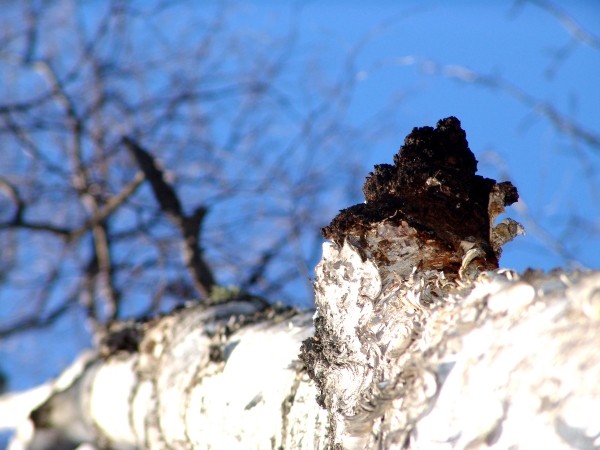
- 1968: Nobel Prize in Literature winner Aleksandr Solzhenitsyn brought it worldwide attention by dealing, in his novel Cancer Ward, with the story of peasants who drank chaga tea growing on birch trees.
- Present: In Russia, chaga extract is registered and sold as a formal medicine under the name "Befungin."
Safety confirmed by public institutions
1. National Cancer Information Center (Ministry of Health and Welfare, National Cancer Center)
"Getting Complementary and Alternative Therapy Right for Cancer Patients and Families," by the National Cancer Information Center, one of the most authoritative materials in Korea, writes the following about chaga.
"When taking chaga, there is theoretically a possibility of mild adverse reactions, but there have been no adverse reactions known to date."
What matters here is the phrasing. "Theoretically there is a possibility" is a boilerplate caveat attached to any food, and the actual conclusion is "there have been no adverse reactions known to date."
2. BC Centre for Disease Control (BCCDC), Canada
The review results of overseas public institutions point in the same direction. While reviewing the safety of "chaga mushroom tea," the BC Centre for Disease Control analyzed 5 chaga-related cases reported to poison information centers since 2014. The conclusion was as follows.
- All 5 cases involved taking other herbs or plants (maca, ginseng, etc.) together with chaga, or having a pre-existing illness.
- In none of the cases was a sample of the chaga itself secured.
- The report concluded that "the evidence of toxicity is only circumstantial."
For reference, the realistic risk pointed out by this report was not chaga's components but contamination and misidentification of the raw material. In other words, the core of the problem is "another mushroom mistakenly taken as chaga" or "low-quality raw material contaminated with mold or bacteria."
3. Health Canada
Health Canada classifies chaga as a formal mushroom product and attached the caveat that pregnant or breastfeeding women should consult a professional.
4. Memorial Sloan Kettering Cancer Center (MSKCC), USA
Memorial Sloan Kettering Cancer Center (MSKCC) advises consulting a professional if you are taking blood thinners or diabetes medication, which is a caution regarding interactions with drugs and a different matter from grounds for chaga side effects.
Toxicity figures measured by experiments — 'practically non-toxic'
The word "safe" can be confirmed not just by assertion but by numbers. The representative indicator of acute toxicity is LD50, the dose at which half of the test animals die.
In a 2025 experiment in the Ukrainian Journal of Veterinary Sciences (Derkach et al.), the oral LD50 in rats was measured at 8,890~9,175 mg/kg, and the researchers classified this in the "practically non-toxic" category. Also, in the study by Chen et al. (2009), when chaga polysaccharides were orally administered to mice in a single dose of 5,000 mg/kg, no liver or kidney toxicity appeared.
Simply converting based on a 60 kg adult, the rat LD50 (about 9,000 mg/kg) corresponds to far more than 500 g. It is clear that the margin of safety is so large that it cannot even be compared with the daily intake level of 1~10 g of chaga.
Chaga, whose role for the liver has been reported
More interestingly, contrary to the claim that chaga burdens the liver, academic literature reports chaga's role for the liver.
The review of chaga polysaccharides published by Lu et al. in Polymers in 2021 specifies liver-related content in the list of chaga's physiological activities, and states that chaga's efficacy has been proven "without obvious side-effects" in long-term clinical and animal experiments.
In the materials compiled by the National Cancer Information Center as well, a role for the liver is mentioned as one of the biological effects of chaga extract.
Long-term observation records left by the former Soviet Union
There are records that the First Leningrad Medical Institute observed 150 patients with severe gastric ulcer, hepatitis, and cirrhosis for over 10 years without confirming side effects; that the Pharmaceutical Research Institute under the former Soviet Academy of Sciences and the First Leningrad Medical Institute observed 281 patients with stomach cancer, lung cancer, and esophageal cancer (124 stomach cancer, 84 lung cancer, 73 esophageal cancer) for 9 years; and a study reporting the results of drinking by stage 4 cancer patients over 5 years.
What these materials show is that the results of chaga drinking were observed in humans over a long period of 5~10 years, and there were no reports of toxicity to normal cells.
There is also animal toxicity data. According to Russian data, no abnormalities occurred when 1 g per kg of body weight was administered to mice, and only at the very high dose of 30 g per kg of body weight was a symptom of slightly dulled peripheral sensation reported.
I promise you
Chaga is a food that people have eaten for hundreds of years, is listed as a food ingredient in our country, and no clear toxicity or adverse reactions have been confirmed in published toxicity tests and public institution data. Also, our company has been selling chaga products for the past 22 years, and at least regarding chaga's safety, we have been able to be confident.
Please be reassured. If there is a problem, we will not hide it but inform our customers first and respond properly. If you have any questions, please feel free to contact us anytime. I will answer personally at my personal number, 010-4311-1191.
Thank you.
Ohkinam, CEO of Ohkinam Chaga
* References
- National Cancer Information Center (Ministry of Health and Welfare · National Cancer Center), "Getting Complementary and Alternative Therapy Right for Cancer Patients and Families" and guidance on complementary therapy during anticancer treatment (cancer.go.kr)
- BCCDC, Risk assessment of chaga mushroom tea, Food Issue — Notes from the Field, 2016
- Derkach, I., et al. (2025). Determination of acute toxicity parameters of the extract of the basidial tree fungus Inonotus obliquus. Ukrainian Journal of Veterinary Sciences, 16(2), 29–45.
- Lu, Y., et al. (2021). Recent Developments in Inonotus obliquus (Chaga mushroom) Polysaccharides. Polymers, 13(9), 1441.
- Chen, H., et al. (2009). Acute toxicity evaluation and compositional analysis of a polysaccharide from the medicinal mushroom Inonotus obliquus.
- Ministry of Food and Drug Safety food ingredient list (Food Safety Korea) — chaga (black birch mushroom, Fuscoporia obliqua)
- Memorial Sloan Kettering Cancer Center, Chaga Mushroom drug interaction guidance
- Russian-side research records and related academic and industry materials (1950s First Leningrad Medical Institute research, 1955 Soviet Ministry of Health approval, Befungin-related materials)
- Kinam Oh, kinam_oh@hanmail.net