

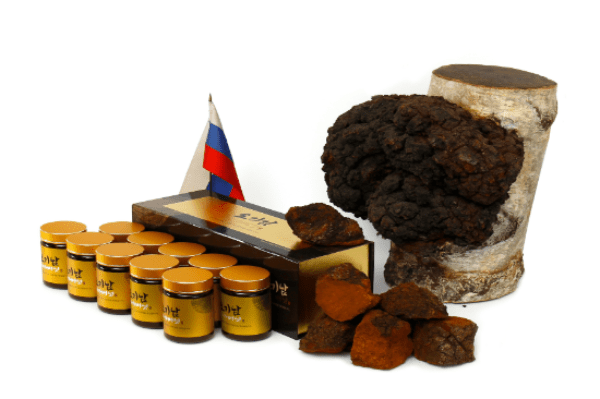
The principle of making a good chaga mushroom extract powder product is simple.
The method of making a good chaga mushroom extract powder product is, in fact, simple.
First, use good raw materials, and second, deliver the natural nutrients of those raw materials to consumers without loss.
For the past 22 years, our Ohkinam Chaga has quietly practiced this simple principle. In the previous article, we explained the use of good raw materials; today, we explain the process Ohkinam Chaga goes through to produce chaga mushroom extract powder products, and the reasons behind each of those choices.
Exclusively produced at a local pharmaceutical company's GMP facility in Siberia
Unlike most chaga companies, which entrust product manufacturing to specialized extraction companies, Ohkinam Chaga products are produced at the facility of a local pharmaceutical company in Siberia, Russia that meets Good Manufacturing Practice (GMP), the world-class standard for pharmaceutical production, through the same process as medicines.
This pharmaceutical company operates an exclusive OEM production line dedicated solely to Ohkinam Chaga. Although it costs far more, there is a clear reason why Ohkinam Chaga has kept this principle for more than 20 years.
Many of those who seek out chaga mushrooms suffer from serious illnesses or have very weak bodies. Since the product is provided to such people, a strict environment at the same level as manufacturing medicines is required in every respect—equipment, technology, hygiene, and more. Production at a GMP facility guarantees not only hygienic safety but also the consistency and stability of product quality.

Process 1. Extraction - No boiling, slowly at low temperatures
- Why high-temperature extraction damages chaga quality
The extraction process is the process of drawing nutrients out of the chaga raw material using water. The most critical variable in the extraction process is temperature. High-temperature extraction yields far more extract. However, two fatal problems occur in this process.
First, chaga's heat-sensitive key nutritional components are destroyed.
Second, large amounts of unnecessary components, such as woody components with no nutritional value, are extracted, hindering the human absorption of the actual effective components.
This is why companies looking to increase production volume and reduce costs choose high-temperature hot-water extraction.
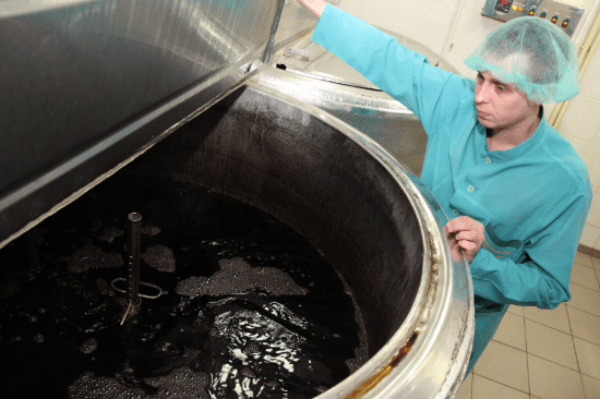
- Ohkinam Chaga's low-temperature extraction principle
Ohkinam Chaga insists on a low-temperature extraction method that starts extraction at 65 degrees Celsius and finishes at 45 degrees Celsius.
This temperature range is the optimal condition that both protects chaga's heat-sensitive components and allows the effective components to be sufficiently extracted.
Compared with high-temperature extraction, low-temperature extraction yields less and is far more demanding technically. However, it is a principle that must be kept in order to fully capture the natural nutrients of the chaga exactly as they are.
Process 2. Filtration - Two-stage filtering that preserves purity
The chaga extract obtained from completed extraction undergoes a filtration process. The purpose of this process is twofold.
One is to block the possibility of contamination by bacteria, germs, and fungi; the other is to remove unnecessary solid components, such as woody matter, other than chaga's effective nutritional components.
Ohkinam Chaga performs filtering twice using ultra-fine particle filters. Going through two filtrations rather than settling for one reflects Ohkinam Chaga's high standards for product purity and hygiene.
Because many of those who seek out chaga mushrooms are in poor health, hygienic safety cannot be emphasized too much.
Process 3. Concentration - The process where technical skill is most evident
- Why low-temperature extract is difficult to concentrate
The chaga extract that has gone through extraction and filtration is turned, through the concentration process, into a concentrate with 35% solids, known in Russian as 'Gustoy' (Густой).
This process is the most technically difficult stage in the entire chaga manufacturing process, and the stage where the differences in manufacturers' skill are most evident.
Chaga extract obtained through low-temperature extraction has very unstable properties; if concentration is attempted without the proper technology, it hardens like sugar or grain syrup within just a few hours and deteriorates.
This is also a key reason why companies lacking technical skill have no choice but to choose high-temperature extraction: with high-temperature extraction, the risk of deterioration during the concentration process is relatively lower.
- Ohkinam Chaga's vacuum low-temperature concentration
Ohkinam Chaga carries out the concentration process while maintaining a temperature of 45–55°C under vacuum.
When concentration is performed under vacuum, moisture evaporates effectively even at low temperatures, so a stable concentrate can be produced while protecting chaga's heat-sensitive components.
To perform this process correctly, expensive vacuum concentration equipment is essential, along with technical know-how born of long experience.
The stage where Ohkinam Chaga's experience and technical skill, accumulated over more than 20 years, shine the brightest is precisely this concentration stage.
Process 4. Drying - The final gateway that minimizes loss
- The essence of the drying process: not a stage that raises quality, but a stage that must not ruin it
The Gustoy that has completed concentration is turned into powder through the drying process. Compared with the liquid state, the powder state has a stable molecular structure, which is advantageous for preserving chaga's nutrients over a long period.
Understanding the essence of the drying process is important. Because drying is the process of removing moisture, it is impossible to improve a product's quality through drying.
The best that can be done in the drying process is to minimize the loss of chaga's nutrients. In particular, since a considerable number of chaga's bioactive substances are volatile components, the longer the drying time, the greater the loss of these components.
Therefore, the core virtue of the drying process is one thing only: keeping the drying time as short as possible.
- Comparison of drying methods and Ohkinam Chaga's choice
The drying times of the main drying methods are compared as follows.
Spray drying (SD) = 15–30 seconds Low-temperature vacuum drying (VD) = 30–60 minutes Freeze drying (FD) = 24–72 hours
Ohkinam Chaga's drying method for each product is as follows:
Premium Gold / Premium:
Applies a low-temperature spray drying (SD) method, maintaining low temperatures while minimizing the loss of volatile components through ultra-short drying of 15–30 seconds
Classic:
Applies a low-temperature vacuum drying (VD) method, securing stable quality with a drying time of 30–60 minutes
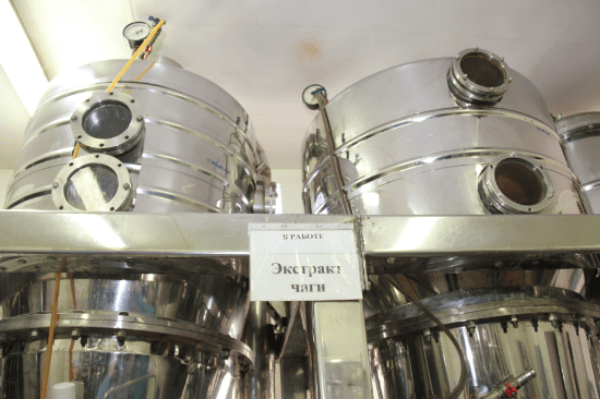
- Why Ohkinam Chaga does not use the freeze-drying method
First, the freeze-drying method is fundamentally unsuited to the nature of chaga extract powder products
The freeze-drying method was originally developed to preserve, as much as possible, the color and shape of ingredients that can be eaten directly, such as dried vegetables and dried fruits. If we were to eat chaga raw material directly, we might consider the freeze-drying method, which preserves the shape of the chaga.
However, what we eat is not the chaga raw material but the extracted components. For drying a liquid concentrate whose original chaga form has completely disappeared through the extraction process, there is no technical reason whatsoever to use the freeze-drying method to preserve shape.
Second, the freeze-drying method actually increases the loss of the chaga extract powder's nutrients
The freeze-drying method is a method of drying while continuously pumping out the air and moisture inside the drying tank to maintain a vacuum state during a very long drying time of 24 to 72 hours.
During this long time, the physical and chemical stress the chaga concentrate undergoes is enormous. The volatile components, which account for a considerable portion of chaga's bioactive substances, continuously vaporize and are lost throughout this long drying time.
Compared with the 15–30 seconds of spray drying and the 30–60 minutes of low-temperature vacuum drying, how great the difference in drying time is becomes plainly clear. The longer the drying time, the greater the loss of nutrients inevitably becomes.
This is why specialized local manufacturers in Siberia, Russia have not used the freeze-drying method for producing chaga extract powder.
Third, the risk of metal powder contamination arises in the grinding process after freeze-drying
There is one more important problem with the freeze-drying method.
The solids of the chaga extract that have finished freeze-drying become very hard and difficult to break. To turn them into powder form, a separate grinding process is absolutely required.
In this grinding process, the possibility of fine metal powder being generated as the grinder's metal blades rub strongly against the solids cannot be completely ruled out.
Many of those who seek out chaga mushrooms suffer from serious illnesses or have very weak bodies. Accepting the possibility of metal powder contamination in products provided to such people is entirely at odds with Ohkinam Chaga's product philosophy.
In contrast, the spray drying method is a method of spraying the liquid concentrate into fine particles and powdering it in an instant, so the grinding process itself is not needed. The possibility of metal powder contamination structurally does not exist.
The freeze-drying method is an excellent drying technology. However, it is a method that does not suit chaga extract powder. Promoting the freeze-drying method for chaga extract powder products is not an expression of technical superiority; it is merely a marketing choice.
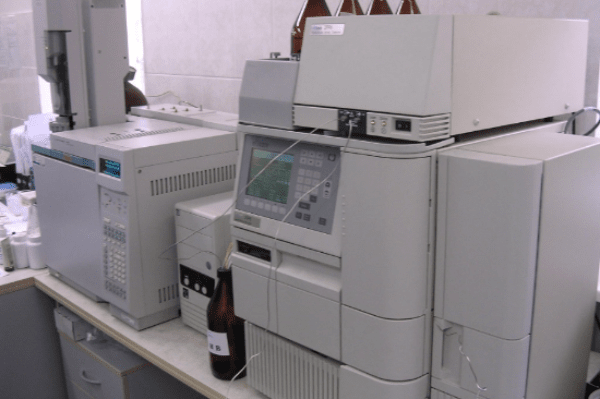
Process 5. Component testing and quality analysis - Pharmaceutical-level quality control
The last step of the manufacturing process is component testing and quality analysis of the finished chaga extract powder.
Ohkinam Chaga analyzes its products using advanced analytical equipment such as the atomic absorption spectrometer used by pharmaceutical companies. Rigorous quality verification is conducted across a wide range of items, including chromogenic complex content, mineral components, bacterial contamination, and heavy metal testing.
In particular, Ohkinam Chaga does not rely on the chromogenic complex figure alone. The chromogenic complex is an analytical indicator developed in the 1950s, and from the perspective of modern science it has the limitation of failing to accurately reflect the content of the actual effective components and the relative ratios among components.
Some companies artificially raise the chromogenic complex figure by excessively mixing in the outer bark, which has already finished oxidizing and has no nutritional value. While the outer bark has strong antibacterial capability, it is difficult to expect the antioxidant action that is chaga's key efficacy, and it can actually be a burden for those with weak bodies.
The Promise of Ohkinam Chaga
The efficacy of the chaga mushroom comes from the combined action of countless unique components not yet identified, in addition to the known major components. While the number of chemical substances modern science can create does not exceed 3,000, the number of compounds produced by a single tree reaches 100,000.
Even if a specific component of chaga is extracted separately, or fortified from outside and added, chaga's inherent efficacy does not appear. Chaga's efficacy is fully exercised only when eaten as chaga itself.
Therefore, delivering to consumers, without adding or subtracting anything, the natural nutrients of Siberia just as they are—the nutrients inherent to the chaga mushroom—is the unchanging principle and philosophy that Ohkinam Chaga has kept for more than 20 years.
Insisting on good raw materials, insisting on low-temperature extraction, insisting on vacuum concentration, insisting on a short drying time, and insisting on production at a GMP pharmaceutical facility—the reason for every one of these choices is one thing only.
To fully deliver the natural nutrients of the chaga mushroom, just as they are in nature, from Siberia to the consumer's hands—that is the unchanging promise Ohkinam Chaga has kept for more than 20 years.
- Kinam Oh, kinam_oh@hanmail.net