

Mushrooms are one of the foods we often turn to for a healthy life. From shiitake and oyster mushrooms, which are easily found at markets and supermarkets, to medicinal mushrooms such as reishi and sanghwang mushroom, the varieties are extremely diverse.
Yet among this vast array of mushrooms, the chaga mushroom receives especially special treatment because of its rarity and overwhelming efficacy. Having operated a company specializing in chaga mushrooms for 22 long years and received the steady love of our customers, I believe this is precisely because chaga mushrooms possess a fundamental excellence that sets them apart from ordinary mushrooms.
So what exactly makes chaga mushrooms so different from other mushrooms that they boast such extraordinary excellence? Let me describe in detail the distinctive characteristics of chaga mushrooms, shaped by great nature itself.
1. A Mushroom That Lives Only a Few Days vs. a Mushroom That Endures for 30 Years
If you climb a mountain the day after it rains, you can see mushrooms that have newly sprouted overnight. The lifespan of such mushrooms rarely exceeds a few days. Most of the mushrooms we eat as food ingredients live for only 3 to 5 days, and even sanghwang mushroom, well known as a medicinal mushroom, typically takes only about 6 months to a year to grow.
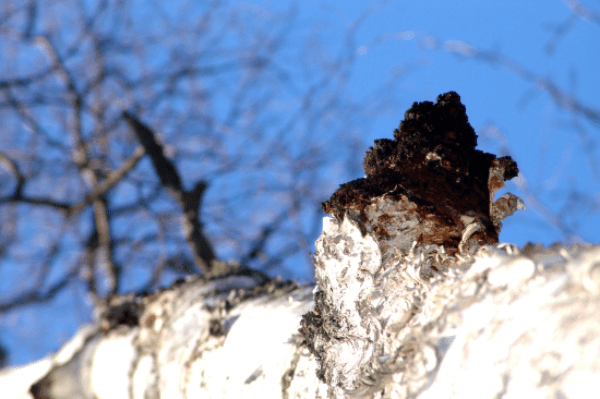
Chaga mushrooms, however, live on an entirely different scale of time. They first grow inside a living birch tree for 5 to 10 years, and even after breaking through the tree to emerge outside, they continue growing for another 15 to 20 years. This is an overwhelming lifespan that cannot be compared to that of any other mushroom.
Why does this matter? Since mushrooms lack chlorophyll and cannot photosynthesize, they must obtain nutrients from the host on which they live. It is fundamentally impossible for a mushroom that grows and disappears within just a few days to properly accumulate nutrients within its body.
A mushroom's long lifespan means it has steadily accumulated nutrients over an extended period. A mushroom that has endured Siberia's harsh nature for a minimum of 20 years—and sometimes more than 30 years. This very "depth of time" is the first characteristic that completely sets chaga mushrooms apart from other mushrooms.
2. Greenhouse-Grown Mushrooms vs. 100% Wild Mushrooms
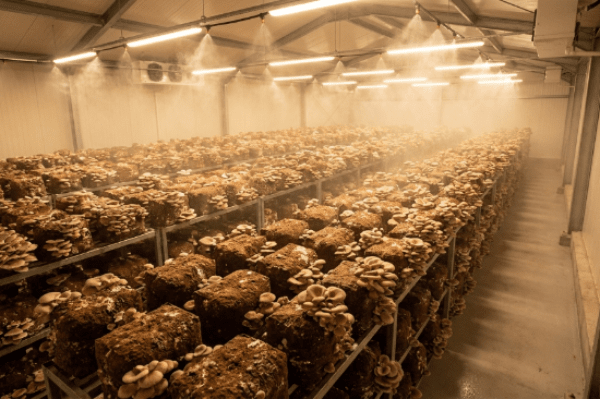
Most mushrooms currently sold on the market are cultivated by humans. Mycelium is planted in dead wood, nutrients are supplied, and temperature and humidity are controlled to grow them indoors. They grow under optimal conditions managed by human hands.
The reason mushrooms accumulate nutrients within their bodies is to prepare for future hardships. A mushroom that grows comfortably in a warm indoor environment managed by people has no reason to store nutrients in its body. Since it doesn't need to worry about survival, it uses its energy solely for growth rather than for storing nutrients.
Chaga mushrooms, on the other hand, are 100% wild. Siberia, where chaga mushrooms grow, becomes an extremely harsh environment in winter, with temperatures falling far below minus 20 to 30 degrees Celsius. In order to endure decades in this harsh natural environment, chaga mushrooms choose survival over growth. Rather than spending energy on rapid growth, they steadily accumulate nutrients within their bodies in order to withstand the extreme environment.
Chaga mushrooms can only be cultivated by great nature and the passage of time. Because there is no human intervention whatsoever, and because they have survived on their own in a harsh natural environment, the outstanding efficacy of chaga mushrooms is preserved.
3. Dead Trees vs. Living Birch Trees
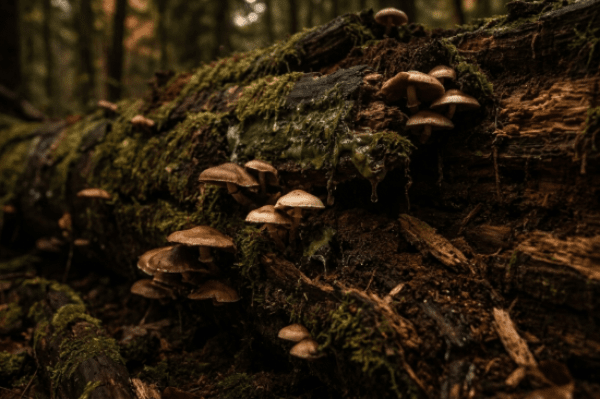
Ordinary mushrooms mostly grow on dead logs, decaying soil, fallen leaves, or sawdust. Living trees secrete powerful defensive substances against mushrooms, which are external invaders, making it difficult for ordinary mushrooms to take root in them. This is why it is relatively easy for people to plant mycelium and mass-cultivate mushrooms indoors by controlling temperature and humidity.
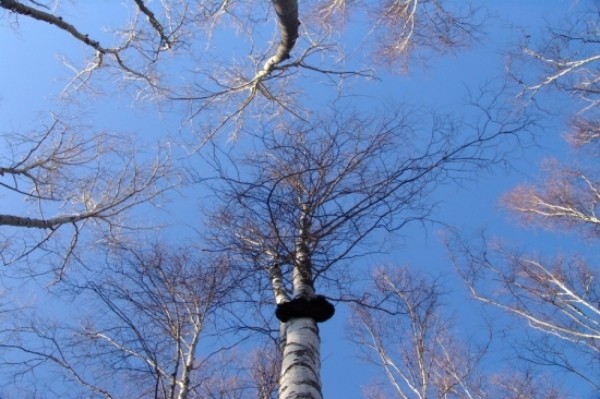
Chaga mushrooms, however, are the exact opposite. They grow only on living birch trees. From the birch tree's perspective, chaga mushrooms are invaders that infiltrate its body and steal its nutrients. In response to this invader, the birch tree continuously secretes flavonoids, its self-protective substance. These flavonoids, produced by the birch tree to protect itself, accumulate steadily within the chaga mushroom's body over many years and become powerful bioactive compounds.
The birch tree is Russia's national tree, and every part of it—from root to leaf—is so excellent that it has been used as a traditional medicinal herb. Chaga mushrooms' efficacy ultimately originates from the birch tree. Because the birch tree itself is so exceptional, chaga mushrooms, having absorbed the essence of that birch tree over several decades, are likewise outstanding.
4. Group Living vs. Solitary Living
If you picture a typical mushroom cultivation facility, dozens or even hundreds of mushrooms grow together from a single growing medium or log. They grow in clusters, mature within a short period, and are harvested together.
But if you go to the birch forests of Siberia, the scenery is completely different. Among hundreds or thousands of birch trees, chaga mushrooms grow on only one.
Only a single chaga mushroom grows on one birch tree. This is because a single chaga mushroom requires the nutrients of an entire birch tree in order to grow. The nutrients contained in one chaga mushroom are the nutrients of one entire birch tree.
5. Mushrooms That Look Like Mushrooms vs. Mushrooms That Don't Look Like Mushrooms
The image we commonly picture when we think of a mushroom is umbrella-shaped, with a cap and a stem beneath it. But when people see chaga mushrooms for the first time, most of them say, "Is this really a mushroom?"
Chaga mushrooms look like lumps of charred, blackened charcoal. Their surface is rough, uneven, and hard. The outer shell is nearly black, but when cut open, the flesh inside reveals a deep brown or yellowish-brown color.
Their size is also irregular, ranging from as small as a child's head to as large as a big watermelon.
This unique appearance is the result of the outer shell hardening and thickening over a long period of survival in order to withstand Siberia's extreme cold, while nutrients and bioactive substances become concentrated inside.
6. Mushrooms Eaten as Food vs. Mushrooms Consumed as Tea
Ordinary mushrooms are basically food ingredients. They are stir-fried, boiled, and added to stews. Chaga mushrooms, however, are consumed as tea. In Siberia, people have been drinking chaga mushroom tea for hundreds of years. It has been consumed as an everyday beverage—used instead of water when thirsty and instead of medicine when ill—by everyone from children to the elderly. Being consumed as tea means that it can be drunk in large amounts and over long periods without particular side effects.
- Kinam Oh, kinam_oh@hanmail.net